

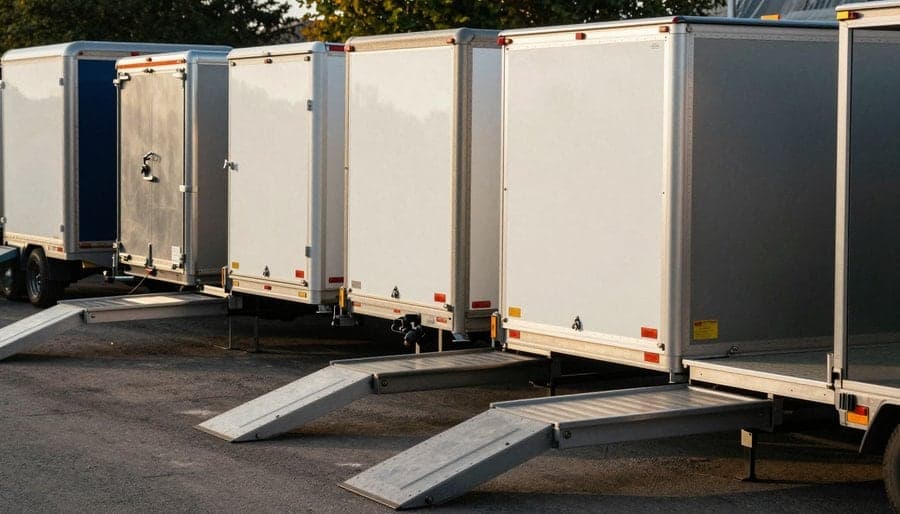
Published September 22, 2026
A trailer leaving the yard is a safety decision, not a booking
When a customer drives off with a generator or a cement mixer, the equipment sits in the bed of a truck or on a driveway. When a customer drives off with a trailer, it becomes part of their vehicle for the whole trip — hitched to the ball, sharing the tow vehicle's brakes and lights, following it around every intersection and highway on-ramp. That difference matters more than it sounds.
If a wheel bearing is worn, a light doesn't work, or the coupler isn't properly latched, the fault doesn't stay in the yard. It travels down the road attached to someone else's vehicle, at speed, often loaded with furniture, construction debris, or a horse. If the trailer's load rating is lower than what's actually going on it, or its size and hitch type don't suit the customer's tow vehicle, the risk isn't a scuffed panel — it's an unstable trailer swaying behind a family SUV on the interstate.
That's the real difference between trailer and towing rental and a lot of general equipment rental: handing over the keys means handing over a piece of road safety, on a public road, with someone else driving. It's why roadworthiness and safety checks, deposits and damage evidence, and matching the right trailer to the right load and vehicle sit right at the center of running this kind of rental business — not as paperwork on the side, but as the actual product.
Pre-rental and return inspections: a roadworthiness record, not a checkbox
Every trailer rental business already knows the basics: check the tires for tread and damage, check the lights work with the customer's vehicle, check the coupler and safety chains, check the jack, check the brakes on a braked trailer, check the floor and sides haven't been weakened by a previous load. None of that is new. What's harder is doing it properly on both ends of every single rental, on a unit that might go straight back out again within hours.
That's the part that gets skipped under pressure — a busy Saturday morning, three customers waiting, and a trailer that looked fine last week. The trouble is that roadworthiness isn't cosmetic. A trailer can look perfectly presentable and still have a corroded frame member, worn brake linings, or a tire that's below legal tread depth. The only way to catch that reliably, rental after rental, is to inspect the same points every time and actually record what was found, rather than glance and wave the customer through.
Why the record matters as much as the check
A pre-rental inspection that isn't written down is only as good as the memory of whoever did it. If a trailer is involved in an incident on the road, or a customer disputes the condition it was in when they picked it up, the business needs to be able to show what was checked, when, and by whom, not just say that checks are always done.
Renttix's digital inspection checklists record pre-rental and return inspections against each individual unit, capturing photos and sign-off so every trailer builds up a documented safety trail over its working life. The same due-list and certificate-storage approach Renttix uses for statutory testing on other equipment types applies here too, through compliance and inspection tools that keep a due list of what needs checking and can block a unit from being booked out again once it's flagged or overdue. For a product where the same physical asset goes out and comes back multiple times a week, that record is the difference between believing it was fine and being able to prove it.
Matching the trailer to the vehicle and the load
The second real risk in trailer rental isn't a fault with the trailer at all, it's putting the wrong trailer behind the wrong vehicle, or under the wrong load. A crossover with a modest tow rating shouldn't be pulling a heavily loaded enclosed trailer; a small braked trailer isn't rated for a full load of debris; a trailer built for a short local run isn't necessarily suited to a long highway trip once payload, tire rating, and hitch height are taken into account.
This isn't obscure knowledge. Load ratings, gross and unladen weights, dimensions, and hitch types are all printed on the trailer's VIN plate and known to anyone who's worked a rental counter for a week. In many places, towing above a certain combined weight also requires a specific driver's license class or endorsement, which is a question worth asking before a trailer goes on the back of a vehicle, not after. The problem isn't a lack of knowledge, it's speed: a busy counter, a line of customers, and a staff member trying to recall the exact specification of a dozen different trailer models from memory.
Storing load ratings, dimensions, and towing requirements directly on each product record turns that into a lookup rather than a guess. With specification-led product records, counter staff can see straight away whether a trailer suits the vehicle and load a customer describes, rather than relying on what they remember about model X versus model Y. That matters just as much for a contractor picking up an equipment trailer as it does for someone renting a small trailer for a single dump run — as covered on Renttix's trailer rental industry page, matching trailers to loads is one of the recurring challenges the sector deals with day to day.
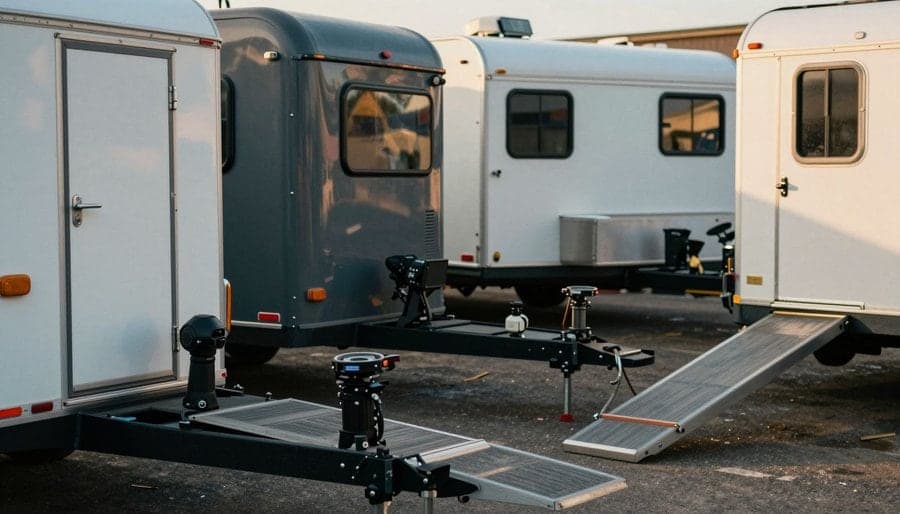
Deposits and damage evidence for a fast-turnaround product
Trailers get knocked around. Ramps get dragged, sides get scraped loading construction debris, tires pick up curb damage, lights get cracked backing up a driveway. None of that is unusual for a rental product that's designed to be loaded, towed, and unloaded by someone who doesn't do it for a living. What causes friction isn't the damage itself, it's not being able to agree on when it happened.
A deposit only works as a safeguard if both sides can point to evidence rather than argue from memory a week after the rental ended. That means recording the condition of a trailer at handover, not just glancing it over, and recording it again at return, with enough detail — photos, dated, against that specific unit — that a dispute has something to be resolved against instead of one person's word against another's.
Renttix's deposit and damage tracking holds deposits against the rental agreement and logs damage with dated photos at both handover and return, so refunds can be resolved with clear evidence on both sides rather than a discussion about whose fault a scrape probably was. Because the same photos and sign-off are often captured as part of the pre-rental and return inspection anyway, damage evidence and roadworthiness checks end up being two outputs of the same piece of counter-side discipline, not two separate jobs competing for time on a busy morning.
Dispatch and pickup at the pace trailer rental demands
A lot of trailer rental happens over the counter — a customer walks in, hitches up, and drives off the same day. But plenty of businesses also deliver and pick up larger trailers, equipment trailers, or units going to trade accounts and job sites, and that side of the operation runs on a different clock than, say, a week-long tool rental. Weekend demand spikes, jobs are often booked at short notice, and a trailer that comes back at four o'clock on Saturday may need to go straight back out to the next customer.
That kind of turnaround needs a dispatch process that doesn't rely on someone remembering which trailer is due where. Planning delivery and pickup jobs on a dispatch board, grouped by route and assigned to a driver, keeps a fleet of trailers moving without double-booking a unit that's technically still out with the previous customer. It also makes it easier to see which trailers are genuinely available for a same-day booking versus which ones are committed to a pickup later that day. For a rental dispatch workflow that has to cope with weekend spikes and short-notice bookings, having jobs planned and grouped by route rather than worked out ad hoc is what keeps a fast-turnaround fleet from quietly grinding to a halt on a busy Saturday.
An illustrative example: a weekend-and-trade trailer yard
It's worth picturing how these pieces fit together in a single business, even as an illustrative example rather than a real case study. Take a trailer rental yard that spends its weekends dealing with DIY customers — dump runs, moves, the occasional small horse trailer — and its weekdays supplying trade accounts with equipment and enclosed trailers on standing arrangements.
The two customer types put different pressure on the same fleet. A Saturday-morning DIY customer usually needs quick, confident guidance: which trailer suits their vehicle and the load they've described, and reassurance that it's been checked and is safe to tow. A trade account picking up an equipment trailer on a Tuesday morning cares more about it being ready and available exactly when booked, because a late trailer holds up a job on site. Both depend on the same underlying discipline: an accurate product record so the right trailer gets matched to the right vehicle and load in either case, a completed pre-rental inspection so nothing goes out with a fault that turns into a problem on the road, and a deposit and damage record so a scraped side panel from the weekend crowd doesn't turn into an argument with a trade customer who never touched that unit.
Where the yard also delivers larger trailers to job sites, the same dispatch board that plans a Saturday morning's worth of counter pickups can group Tuesday's site deliveries by route, so the driver isn't working out delivery order from a whiteboard while a line builds up at the counter.
Bringing inspection, matching, deposits and dispatch together
None of these four things — inspection discipline, specification matching, deposit and damage evidence, and dispatch — work well in isolation. A perfectly matched trailer that hasn't been inspected is still a risk on the road. A well-inspected trailer that's the wrong size for the customer's load is still a problem, just a different one. And a business that gets both right but can't get the trailer to the right place at the right time loses the booking anyway.
Because trailer and towing rental carries that duty-of-care dimension — a fault or a bad match doesn't just annoy a customer, it goes out onto a public road — the operational discipline behind it deserves the same weight as the sales side of the business. Renttix brings the inspection checklist, the product specification, the deposit record, and the dispatch board together in one place, built around the way this kind of rental actually works, as set out on the trailer rental industry page. If you want to see how it fits your yard's own mix of weekend and trade business, book a demo and walk through it against your own fleet.
Trailer rental software: frequently asked questions
Being insured doesn't remove the value of a documented inspection trail. If a trailer is involved in an incident, or its condition is disputed after a rental, being able to show what was checked, when, and with what result carries far more weight than saying checks are always done. Renttix's digital inspection checklists record pre-rental and return inspections against each individual trailer, with photos and sign-off, so that record exists as a normal part of the rental process rather than something that has to be reconstructed after the fact.
The reliable fix is to stop relying on staff memory for a dozen or more trailer specifications and put the numbers on the record itself. Storing load ratings, dimensions, and towing requirements against each product means counter staff can check a trailer's specification against what a customer describes about their vehicle and load in seconds, rather than guessing from experience during a busy period.
Evidence beats memory. Recording the trailer's condition with dated photos at handover, and again at return, against that specific unit, gives both sides something concrete to look at rather than relying on recollection days or weeks later. Renttix's deposit and damage tracking holds the deposit against the rental agreement and keeps that handover-and-return photo record attached to it, so a refund decision can be resolved against evidence rather than an argument.
Explore Renttix
Ready to modernize your rental operations?
Payments + deposits enabled • Quick setup