

Published September 22, 2026
Why event rental doesn't get to be late
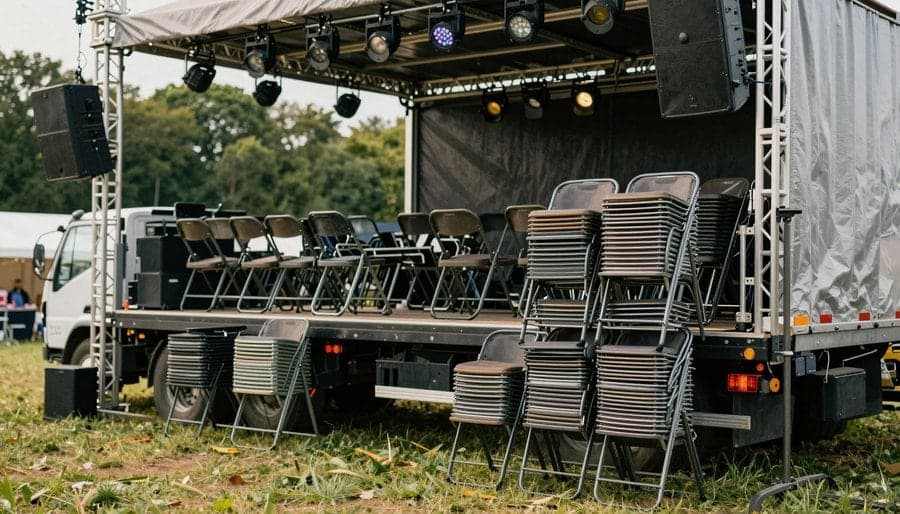
Most rental businesses can absorb a delay. An excavator that shows up an hour late on a job site is an inconvenience; a trimmer that goes out a day behind schedule costs a little goodwill. Event rental doesn't get that luxury. A wedding has a start time. A conference has a doors-open moment. A festival has a stage that goes live whether or not the sound system has arrived. The date is fixed, the guest list is watching, and there's no version of the job where "we'll get it sorted by Tuesday" is an acceptable answer.
What makes this harder is that the order behind that fixed date is rarely simple. A single event booking might mean chairs, tables, linens, and glassware for the reception, a tent and flooring for the site, a PA and lighting rig for the evening, and a generator to power all of it - sometimes split across two or three delivery addresses because the ceremony, the reception, and the after-party aren't in the same place. Then, almost without exception, something changes in the final week: the guest count moves, the client swaps round tables for banquet tables, the venue reschedules the load-in slot by three hours. None of that is unusual - it's the normal operating rhythm of event rental.
That combination - complex multi-item orders, a genuinely immovable deadline, and constant last-minute revision - is what event rental software actually needs to solve. It's a different problem from managing a fleet of heavy equipment or a tool counter, and it's worth being specific about what solving it looks like in practice.
The three pressure points event rental businesses actually face
Renttix, which builds software for equipment rental businesses including event rental, names the challenge in three parts: complex multi-item orders, tight turnaround between events, and accurate billing for complex rentals. It's a useful breakdown, because each part needs a different answer.
Multi-item orders need a way to build a large, varied order quickly without losing track of what's going where. Tight turnaround needs real visibility into what's free, what's booked, and what's coming back in time for the next job. And accurate billing needs the invoice to reflect what actually happened on-site, including every last-minute swap, not what was quoted three weeks earlier.
Building complex multi-item orders without losing track
An event order is rarely one line. It's dozens of items - seating, table linens, glassware, staging, power, audio, lighting - often split across more than one delivery point for the same event. Building that manually, or rebuilding it every time a detail changes, is where mistakes creep in: an item assigned to the wrong address, a quantity that doesn't match the final headcount, a rental period that doesn't match the actual event dates.
Renttix's event rental industry tools are built around multi-item order management - putting a large order together quickly, assigning individual items to specific delivery addresses within the same booking, and carrying it through the full lifecycle from quote to return rather than re-entering the same information at each stage.
From quote to return
Keeping the quote, the confirmed order, the delivery instructions, and the return date as one continuous record, rather than four separate documents, matters most on the jobs with the most moving parts. When a client confirms 150 chairs instead of 120 two days out, that change needs to reach the pick list, the delivery address, and the invoice without someone manually updating three different spreadsheets.
Preventing double-booking across overlapping events
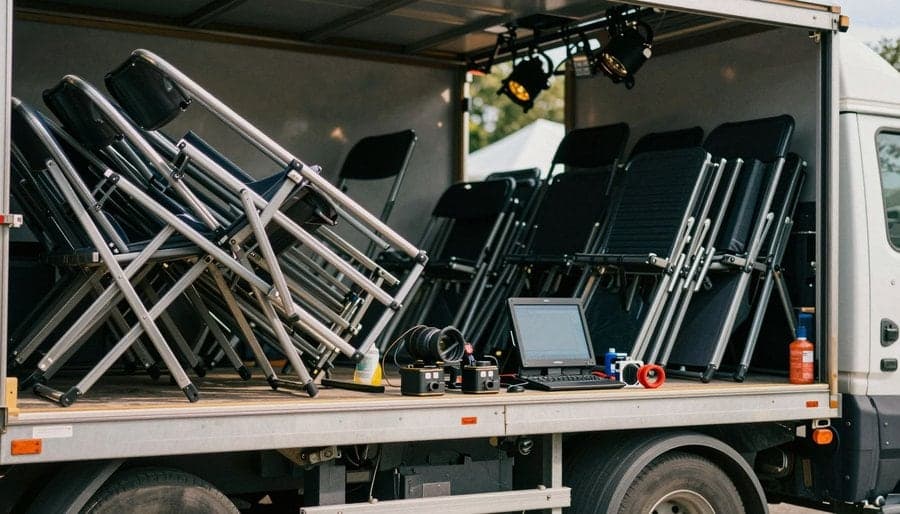
Event businesses rarely run one job at a time. A busy weekend might mean a Friday evening corporate event, a Saturday wedding, and a Sunday baptism, all drawing from the same pool of chairs, linens, and lighting rigs, and all overlapping in time by a few hours at the edges as one load returns while the next goes out. Double-booking the same 200 chairs to two different Saturday weddings is the kind of error that's invisible on a spreadsheet until a driver is standing in the yard short of stock.
Renttix addresses this through availability tracking across events: knowing what's available and when, so the same item can't be promised twice against overlapping bookings, and so a last-minute change to one order gets checked against everything else already on the books before it's confirmed. That's the same event rental industry capability that underpins multi-item orders - the two problems share the same root, which is needing a single accurate picture of stock rather than several partial ones.
Handling last-minute changes without derailing the schedule
Nearly every event order changes after it's confirmed. A last-minute change is normal in this trade in a way it simply isn't in, say, construction equipment rental, which means the software needs to treat it as a routine event, not an exception that breaks the plan.
In practice that means two things need to happen together: the change has to be checked against availability immediately, so a bigger order doesn't get confirmed against stock that's already promised elsewhere, and it has to flow through to whoever is planning the delivery run. That's where the dispatch workflow matters - jobs are planned on a dispatch board, grouped by route, and assigned to drivers, so a quantity change or an added drop point can be replanned into the run rather than handled as a separate phone call to the warehouse.
Packages and kits: pricing and dispatching equipment as one unit
Event equipment naturally comes in bundles - a table setting is a table, a cloth, and a set of chairs; a basic AV setup is a PA, a mixer, and a pair of speakers. Building every order item by item from scratch is slow, and easy to get wrong when the same combinations get booked over and over.
Renttix's kits, bundles, and pricing tools let equipment kits book and dispatch as a single unit, with priced bundles and rate definitions that support duration rules - useful for a package like chairs, tables, and linens sold together, or a PA-and-lighting rig priced as one line rather than assembled fresh for every quote.
A step further for AV and production rental
Businesses running the audio, visual, and production side of events have a narrower margin for error, because there's no second chance once the doors open. Renttix's AV and production rental tools extend the same idea with package and pick-list building - saving reusable equipment packages and generating accurate pick lists down to the last cable and clamp, so a crew loads a complete kit rather than discovering a missing DI box on-site.
Multi-address delivery and on-site logistics
A single event can mean several delivery points: the tent company to the field, catering equipment to a different service entrance, and the AV rig to the stage door, sometimes all on the same morning. Planning that as a set of individually remembered jobs doesn't scale past a handful of events a week.
Renttix's dispatch workflow plans delivery and collection jobs on a dispatch board, grouped by route and assigned to drivers, so a multi-address event can be planned as one coordinated run instead of several unconnected trips. The delivery experience tools carry that through to the day itself: when a driver sets off, the customer gets a text or email with an ETA and a live tracking link, and once the job's done, the same page shows proof of delivery.
Working where the signal doesn't
Tents in open fields, venues with thick stone walls, and festival sites are not known for reliable cell signal, and that's exactly where an event delivery is most likely to happen. The field app drivers use for signature capture, delivery and collection photos, and GPS location at the time of the job is offline-first, syncing once a connection returns, so a poor-signal venue doesn't mean a gap in the record.
Getting billing right for complex, multi-rate rentals
Event rental invoices are rarely a single flat rate. One order might mix a day rate for a tent, an hourly rate for AV technicians' equipment, and a fixed-term rate for furniture across the whole event weekend, plus whatever changed in the final week. Reconstructing that manually at invoice time, from memory or from a marked-up quote, is where billing errors creep in.
Renttix's automated billing and invoicing generates invoices based on what was actually rented, when, and at what rate - supporting day, hour, week, and fixed-term billing, combined rates within a single contract, and minimum rental periods, with credit note support built in.
Credit notes and refunds when plans change
Because event orders change so often, refunds and adjustments aren't an edge case - they're routine. Full and partial refunds and credit notes sync to accounts, and the platform connects to QuickBooks, Xero, Sage Business Cloud, and Zoho Books, so an adjusted invoice doesn't need to be re-keyed into the accounting system separately.
When you need to sub-rent for a big event
A large event can outstrip what's sitting in the yard - a wedding season peak weekend, or a festival needing more generators than the business owns outright. Sourcing extra stock from another supplier is routine in event rental, but it adds a second set of costs and a second delivery leg to keep track of against the same job.
Renttix's suppliers and sub-rental tools support cross-renting from suppliers with both the supplier's price and the customer's price tracked against the same order, one-click purchase orders, and proof of delivery captured per leg. For AV and production specifically, sub-rental tracking logs cross-rentals against the job they cover and captures supplier costs and due-back dates, through the AV and production rental tools.
Keeping clients informed without extra admin
Event clients - couples planning a wedding, event managers running a conference - tend to want to check on their own order rather than call to ask. Renttix's customer portal lets customers see their live order and what equipment is on-site, pay invoices, request an off-hire, and sign agreements themselves, which cuts down on the routine "can you confirm what's coming" calls during a busy run-up.
Illustrative example: back-to-back weekend weddings
Consider an illustrative case: an event rental company running back-to-back weekend weddings, with the same stock of chairs, table linens, and a tent moving from a Friday setup through a Sunday teardown and straight into the next week's bookings. Two Saturday weddings sit close enough on the calendar that a chunk of the same inventory is committed to both - due back from one on Sunday morning, due out to the next by Friday afternoon.
A late change on the first wedding - twenty extra guests, confirmed on Wednesday - needs checking against what's already promised to the second before it's accepted, not after a driver turns up short. The revised order needs to reach the pick list and the dispatch run without a parallel phone call to the warehouse, and the final invoice needs to reflect the extra chairs and linens actually delivered, not the original quote. None of this is unusual for an event rental business; it's the normal shape of a busy weekend, and it's the reason multi-item orders, availability tracking, and accurate billing have to work together rather than as separate systems.
Businesses weighing how to handle this kind of overlap can book a demo to see the availability and billing tools against their own order patterns.
Frequently asked questions
Treat the change as routine rather than an exception. The revised quantities or items need to be checked against current availability immediately, then flow through to the pick list and the dispatch run for that job rather than being handled as a side conversation with the warehouse. Renttix's availability tracking and [dispatch workflow](/en-us/workflow/rental-dispatch) are built to carry a late change through to delivery without it getting lost between the office and the yard.
The stock needs a single, accurate record of what's committed to which booking, checked in real time rather than reconciled at the end of the week. Renttix tracks availability across events through its [event rental industry tools](/en-us/industries/event-rental-software), so the same item can't be confirmed against two overlapping bookings - which matters most in a busy season when jobs run back-to-back with little turnaround between them.
Plan it as one coordinated job rather than several separate ones. Renttix's multi-item order management lets individual items within the same order be assigned to different delivery addresses, and the [dispatch workflow](/en-us/workflow/rental-dispatch) groups the resulting jobs by route so a multi-address event goes out as a planned run rather than a set of disconnected trips.
Explore Renttix
Ready to modernize your rental operations?
Payments + deposits enabled • Quick setup