


Published September 22, 2026
A Storage Container Doesn't Behave Like Most Rental Equipment
A storage container doesn't behave like most things going out on rent. It doesn't go out for a day, a weekend, or even a couple of weeks. It goes out once — craned or delivered onto a construction site, parked at the back of a business's property, or placed in a self-storage yard — and then it just sits there, doing nothing but holding someone's belongings, for months at a time. Nobody is inside it. Nothing about it changes from one week to the next. And yet it still has to be billed correctly for every single period it stays on rent, and it still has to be locatable the moment someone in the office needs to answer the question: where's unit 214 right now?
That's the operational reality of storage container and portable storage rental — pure storage space, not a welfare unit or a site trailer that someone occupies, just steel and space that holds a customer's tools, inventory, or equipment until they need it back. It's a different problem from renting out equipment that goes out and comes back on a predictable cycle. A container fleet is mostly static, mostly out of sight, and scattered wherever customers happen to need storage — which means the three things that actually decide whether a container rental operation runs cleanly are how it gets billed month after month without anyone re-keying a charge, how the business knows exactly which site or location every unit is currently sitting on, and how delivery and pickup get planned when "the site" could be a construction project, a business's own yard, or the rental company's own self-storage facility.
Recurring Billing Is the Right Model for a Multi-Month Rental
A container that's picked up the same week it goes out is simple to invoice — one rental, one invoice, done. That's not how most container rentals work. A container delivered to a construction site for the duration of a sitework contract, or placed in a customer's yard for ongoing overflow storage, can stay on rent for six months, a year, or longer, with no natural end date until the customer actually calls for pickup.
That kind of rental needs to be billed every period it's out — typically monthly — for as long as it runs, and each charge has to reflect exactly how long the unit was on rent that period, including the periods where the rental starts or ends partway through rather than lining up neatly with a billing cycle. This is exactly what recurring billing is built for: Renttix bills an ongoing rental automatically on a recurring cycle, calculating accurate part-period and off-rent charges, so a container that's been on a site for eight months stays correctly invoiced throughout without anyone recalculating the charge by hand.
Part-period charges
Because recurring billing runs against the rental record itself, the system already knows exactly when the unit went out, so it can calculate what a partial first period should cost — rather than rounding up to a full period the customer will question, or rounding down and quietly undercharging.
Accurate off-rent dates
The same logic matters just as much at the other end. When a customer calls to say a container can be picked up, the final charge needs to reflect precisely how many days it was on rent that period, based on an accurate off-rent date — not the full period, and not a guess made weeks later when someone finally reconciles the account.
What Goes Wrong When Months-Long Rentals Are Invoiced by Hand
Manually invoicing a handful of containers is manageable. It stops being manageable once a fleet reaches dozens or hundreds of units, each on its own rental period, each with a different start date and an off-rent date nobody can predict in advance. Two failure patterns show up reliably once billing that long-running is done by hand.
The first is the missed period. A container delivered in April gets invoiced correctly for April and May, and then whoever is raising invoices loses track of which units are still on rent — there's no obvious prompt to check — and June slips through unbilled. Nobody notices until a customer's finance department questions a gap, or until someone reconciles rental income against the fleet and finds a unit that's been sitting on a site for two months generating nothing.
The second is the wrong part-period charge. A container due off-rent mid-month actually gets picked up three weeks early because the customer's project finished ahead of schedule, or stays on two weeks longer than planned. Whoever raises that final invoice either charges the full period regardless, which the customer is entitled to question, or has to work out the correct pro-rata figure by hand — a calculation that's easy to get wrong under pressure with dozens of other units also needing invoices raised that same week. Neither failure is really a one-off mistake. It's the predictable result of trying to do period-by-period, part-period-aware billing manually across a fleet where units are constantly starting, ending, and running mid-contract at the same time.
Knowing Exactly Which Site a Container Is Currently On
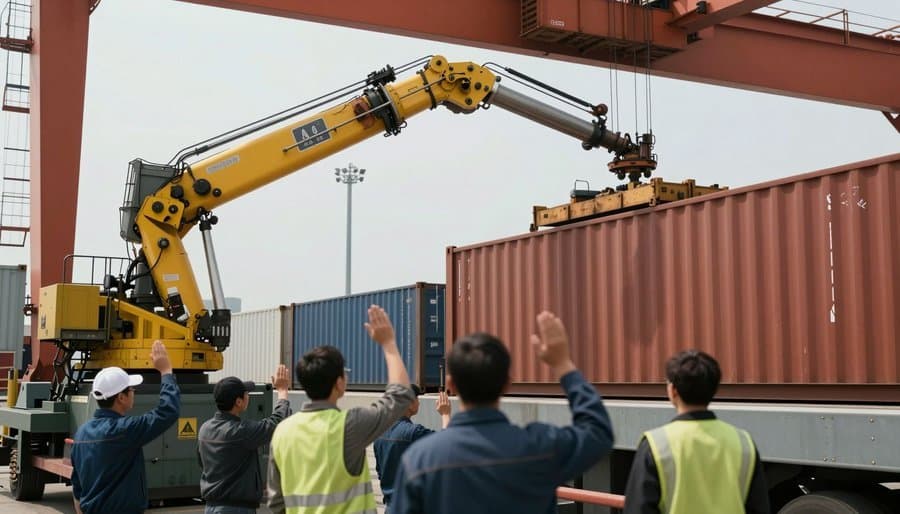
A container fleet that lived permanently in one yard would barely need location tracking — everything would be exactly where it was left. That's not how storage container rental works. Units go out to construction sites, to the back of business properties, into self-storage yards, and stay there for as long as the customer needs the storage. A business running a reasonably sized fleet can end up with units scattered across dozens of locations at once, each on its own rental period, with no single physical place anyone can walk around to see the whole fleet.
This is exactly the gap asset intelligence is built to close: Renttix tracks which site or location a specific unit is on, when it was delivered there, and its full history, so that information is available the moment it's needed rather than reconstructed from a delivery note, a driver's memory, or a phone call to whoever last visited that site.
Answering "where's unit 214 right now?" immediately
When a customer calls asking where their container is, or an operations manager needs to confirm a unit's location before scheduling a pickup, the answer needs to come from a record, not a guess. Location tracking against each unit means that question has an immediate answer, every time, regardless of how long ago the unit was delivered or how many other units have gone out since.
Planning pickups without a site visit first
The same visibility is what makes it possible to plan a pickup run without first sending someone out to confirm a container is still where it's supposed to be. Knowing exactly which site a unit is on, and since when, is what turns pickup planning into a scheduling exercise rather than a fact-finding one.
Planning Delivery and Pickup Across Construction Sites, Business Properties and Self-Storage Yards
Getting a container to where it needs to be, and picking it up again once the rental ends, is its own planning problem — and it's a different problem depending on what kind of "site" is involved. A delivery to a construction project might need to be timed around access restrictions and other site traffic. A delivery to a business property might be a single container going into a yard behind an office or warehouse. A pickup from the rental company's own self-storage facility is a much shorter internal job, but it still has to be scheduled, assigned to a vehicle, and completed like any other.
Dispatch scheduling is what turns those deliveries and pickups into planned jobs rather than ad hoc arrangements: Renttix lets a business plan the delivery and pickup of units to and from sites, with routes and a clear job manifest for whoever's driving. That matters more for containers than it might for smaller equipment, because a container delivery or pickup usually needs specific vehicle capability — a hook-loader or a crane-equipped truck — and a driver who knows exactly which unit, which site, and which access point they're dealing with before they arrive.
A clear manifest also matters because container jobs are rarely single deliveries. A day's schedule might mix a delivery to a new construction site, a pickup from a business property where the rental has just ended, and a swap at the self-storage yard — all needing to be routed sensibly so the vehicle isn't crossing back and forth across the same area more than it needs to.
A Fleet of 120 Units: An Illustrative Example
Illustrative example: picture a storage container rental business running 120 units spread across construction sites, business yards, and its own self-storage facility. Some units are only a few weeks into a rental; a good number are due off-rent this month; a few have quietly outlasted the project they were originally delivered for and are still sitting on-site, still being billed, months later. None of that is unusual — it's the normal, constantly shifting state of a container fleet at any given moment.
Without a reliable view of that fleet, the office is working from whatever it can piece together: a spreadsheet that's a few weeks out of date, a filing cabinet of delivery notes, and whoever happens to remember which driver last visited a particular site. Billing runs off that same patchy picture, which is how a unit ends up generating no invoices for two months, or how a pickup gets missed because nobody flagged that the rental had actually ended.
With recurring billing, site-level location tracking, and dispatch scheduling all running against the same 120 units, the picture changes. The office can see which units are due off-rent this month, exactly which site each one is currently on, and what needs picking up or delivering this week — without phoning around a set of sites to find out.
Bringing Billing, Location and Dispatch Together
None of these three things solves the whole problem alone. A business that bills correctly but has no idea which site a container is on will still struggle to plan a pickup. A business that knows exactly where every unit is but still invoices by hand will still lose revenue to missed periods and miscalculated part-charges. A business that does both but has no way to plan and schedule the actual delivery and pickup jobs will still end up with vehicles going out inefficiently or drivers showing up at the wrong site without the right equipment.
What makes storage container and portable storage rental manageable at scale is having all three run against the same record for each unit — the rental that's generating a recurring charge, the site it's currently sitting on, and the delivery or pickup job scheduled for it — rather than three separate systems, or three separate habits, that someone has to keep in sync by hand.
For a business weighing up whether its current approach to billing, location tracking, and dispatch is holding up as its container fleet grows, it's worth seeing how this works in practice — book a demo to see recurring billing, site-level location tracking, and dispatch scheduling running against a live storage container fleet.
Frequently Asked Questions About Storage Container Rental Software
Renttix bills these rentals on automatic recurring cycles rather than a single invoice per rental. Each cycle calculates the correct charge for that period, including precise part-period charges when a rental starts partway through a billing cycle and an accurate off-rent charge when the container is picked up partway through one — so a container that's out for six or twelve months stays correctly invoiced throughout, without anyone recalculating the charge by hand each period.
Renttix tracks which site or location every unit is on, when it was delivered there, and its full history, so that information is available on demand rather than pieced together from delivery notes or a phone call to whichever driver last visited the site. That means a question like 'where's unit 214 right now?' has an immediate, reliable answer.
Renttix plans the delivery and pickup of units to and from sites — whether that's a construction project, a business property, or the rental company's own self-storage yard — with routes and a clear job manifest for each driver, so a day's schedule of deliveries and pickups across different sites is planned as one coordinated run rather than a set of separate arrangements.
Explore Renttix
Ready to modernize your rental operations?
Payments + deposits enabled • Quick setup