

Published 22 September 2026
The certificate that expires quietly
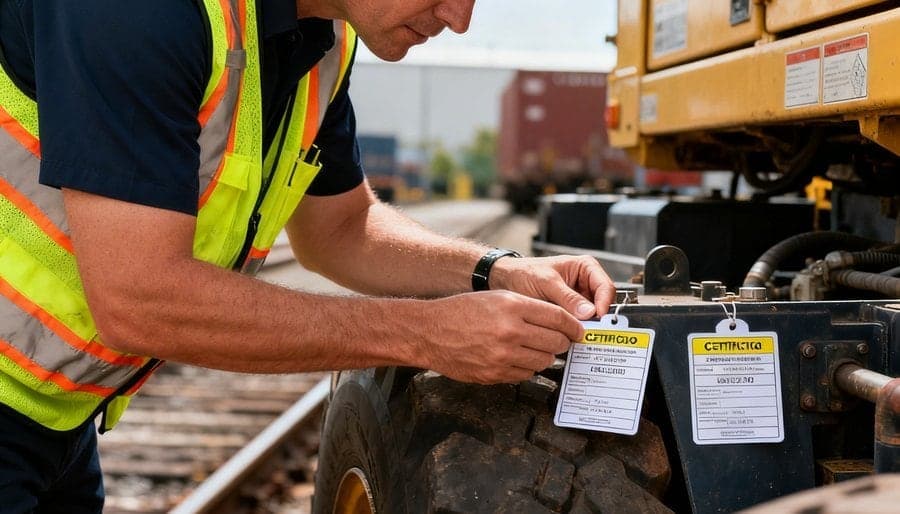
Every piece of certified equipment in a hire fleet carries a hard deadline. A LOLER inspection on a mobile elevating work platform, a PAT test on the extension leads going out with a hired generator, an OSHA-driven inspection interval on a piece of powered equipment, a Test & Tag sticker on a tool heading onto an Australian building site — none of these are optional paperwork. They are legal requirements with a specific date attached, and once that date passes, the item is no longer fit to go out, whatever the booking calendar says.
The real risk here is rarely that a hire business doesn't know the regulation applies. Most operators know exactly which regime covers which asset class. The risk is far more mundane than that: a certificate lapses quietly, on an ordinary week when nobody happens to check the register, while the spreadsheet or wall planner that was supposed to flag it sits untouched. The asset itself doesn't know its certificate has expired. It's still sitting in the yard looking perfectly serviceable, still gets picked for the next job by whoever is loading the wagon that morning, and it goes out anyway.
That gap, between a certificate expiring and somebody actually noticing, is where the exposure sits. Not just for the hire company, but for whoever ends up using that lifting accessory, that access platform or that electrical appliance on site, and for everyone whose name appears on the hire agreement and the inspection paperwork behind it.
What certification tracking actually means, operationally
Strip away the compliance language and certification tracking comes down to three concrete things.
An expiry date attached to the asset
Every certified item — a chain sling, a MEWP, a PAT-tested lead, a piece of Test & Tag'd equipment — has its own inspection or test date, and that date needs to live on the asset record itself, not in a separate document that has to be cross-referenced by hand every time the item is booked.
A warning before the date arrives, not after
A due list that surfaces upcoming and overdue certifications gives the team time to book the inspector, schedule the service, or pull the asset out of rotation before it becomes a problem, rather than discovering the problem when a customer is already loading it onto a lorry.
A block once the certificate has lapsed
This is the part a lot of paper-based systems miss. Knowing a certificate is overdue is only useful if that knowledge changes what happens at the point of booking. Renttix's testing, inspections and compliance capability covers this ground directly: certificate storage against each asset, due lists for what's coming up or already overdue, and booking blocks that stop a lapsed asset going out through the ordinary hire process.
That third piece, the block, is what turns certification tracking from a record-keeping exercise into an actual control.
The regulatory landscape, in outline
The specific regime that applies depends on what the equipment is and where it's being hired. A few well-known examples give a sense of the shape of it.
In the UK, LOLER (the Lifting Operations and Lifting Equipment Regulations) governs lifting equipment and lifting accessories, including cranes, hoists, chain slings and access platforms, and sets out thorough examination intervals that vary by equipment type. PAT (portable appliance testing) covers electrical appliances in the UK and Ireland, relevant to anything from site lighting to the leads on a hired generator. In the United States, OSHA (the Occupational Safety and Health Administration) sets workplace safety requirements that drive inspection intervals for a wide range of powered and lifting equipment. In Australia and New Zealand, Test & Tag is the common term for the periodic testing and tagging regime applied to electrical equipment and leads.
These are named here as real, well-established examples, not as an exhaustive list of everything that could apply to a given hire business. The exact regime, interval and documentation standard depends on the equipment, the country and often the specific industry the equipment is going into, and that's a question for a competent person or the relevant regulator, not a generic article.
What's consistent across all of them, though, is the underlying shape: an inspection happens on a schedule, it produces a certificate or a tag with an expiry, and the equipment is meant to stop being used once that expiry passes. Because the shape is consistent even where the specific rules aren't, a fleet system can treat these regimes as configurable regional presets rather than a single hard-coded rule, which matters for any hire business operating across more than one country or asset class.
A register versus a system that actually enforces it
There's a meaningful difference between two things that sound almost identical: keeping a certification register, and running a system that enforces it.
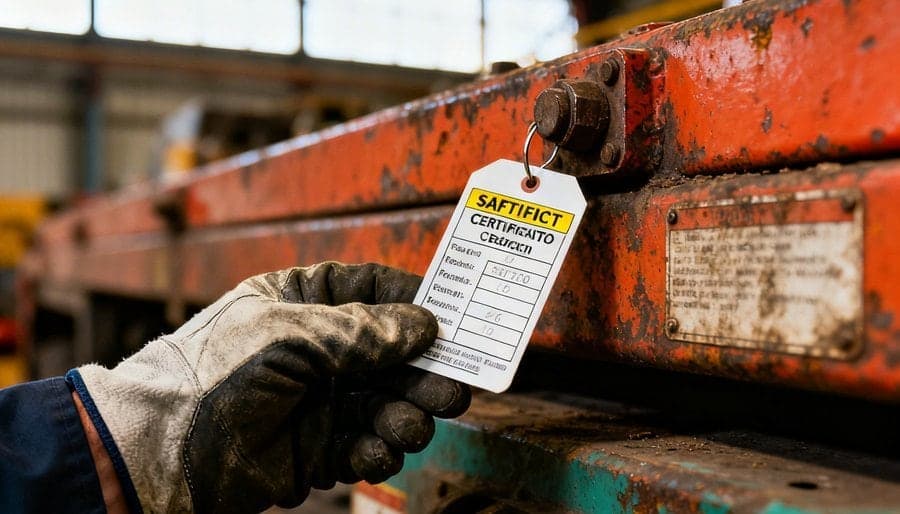
A paper register, or just as often a spreadsheet that's functionally a paper register with extra formatting, records the expiry date. Somebody, in theory, checks it regularly, cross-references it against what's booked out or coming back, and chases up any renewals that are due. That works exactly as well as the discipline of the person doing the checking, every single week, without exception, indefinitely. The moment that person is on leave, the depot is short-staffed, or the register hasn't been updated since the last inspection, the register still says the equipment is fine, because nobody has told it otherwise.
A system that blocks the booking works differently. The expiry date isn't just a fact recorded somewhere; it's a condition the booking process actually checks. If a MEWP's LOLER certificate has lapsed, or a lead's PAT test is overdue, the asset simply can't be allocated to a hire through the normal process, not because someone remembered to stop it, but because the system won't let it happen. Regional presets for LOLER, PAT, OSHA and Test & Tag mean this isn't one hard-coded rule; it reflects whichever regime actually applies to that asset and that territory.
This is the distinction worth pressing on when comparing any compliance approach: does the register just describe what should happen, or does the booking process actually enforce it? A due list nobody reads is still just a register. A booking block on a lapsed asset is enforcement.
An illustrative example: a powered-access hire yard
Take a hypothetical, though entirely typical, illustration: a powered-access hire yard running several dozen mobile elevating work platforms, each with its own LOLER inspection due on its own schedule, because the fleet was bought in batches over several years and the units don't all share a service date.
On paper, that's a straightforward register to maintain, until the yard gets busy, three inspectors are booked for the same week, and a handful of units fall a few days behind schedule while everyone's attention is on getting orders out the door. In a manual system, those units stay visible and bookable in exactly the same way as the fully certified ones, because nothing about how they look in the yard or on the booking sheet has changed. The only thing that's changed is a date on a certificate that somebody would need to actively go and check.
With certificate storage and due lists attached to each unit, the overdue units surface automatically as soon as their inspection date passes, rather than depending on someone cross-referencing the fleet list against the inspection calendar by hand. And because the booking process itself is checking certificate status, rather than trusting whoever is allocating equipment that morning, those specific units simply aren't offered up for hire until the inspection is done and the new certificate is recorded, regardless of how busy the yard is or who's on shift.
Inspection records as an audit trail, not just paperwork
Certification tracking isn't only about stopping equipment going out. The records it produces along the way matter after the event too, particularly if there's ever a dispute or an insurance claim.
If equipment is involved in an incident, or a customer disputes the condition it was returned in, the first question is usually: what do the records show? When was it last inspected, who signed it off, what did the pre-hire and return inspections record, and is there evidence of its condition at each point? Digital inspection checklists that record pre-hire and return inspections against each unit, capturing photos and sign-off, build exactly that kind of documented safety trail, rather than relying on someone's memory of a conversation at the depot counter weeks earlier.
The same logic applies to lower-risk categories that still carry a "must not go out unchecked" requirement. Inspection and cleaning records that log inspections, test dates and cleaning against each item, and flag anything that must not go out, serve the same audit-trail purpose for that category of equipment as a LOLER certificate does for lifting gear.
None of this replaces a genuine physical inspection carried out by a competent person; a record is only as good as the inspection behind it. What it does is make sure that inspection, once it's happened, is captured properly and supports an insurance claim or a chain-of-custody question, rather than becoming a "we're fairly sure it was checked" conversation months after the event. Renttix's compliance and inspections capability brings certificate storage, due lists, booking blocks, insurance claim support and chain of custody together, precisely because those pieces reinforce each other: the certificate proves the asset was legal to hire, and the inspection record proves what condition it was actually in.
Where certification fits in the wider asset picture
Certification status doesn't exist in isolation from everything else that happens to an asset. An item can be fully certified and still not be fit to go out: mid-repair, subject to an investigation after a reported fault, or otherwise flagged for reasons that have nothing to do with its inspection date. Governed lifecycle states that can put an asset on hold, tracked through asset intelligence, extend the same underlying principle: a status change on the asset record should actually change what can happen to that asset next, not just sit there as information for someone to notice if they think to look.
Treating a lapsed certificate as one of several reasons an asset might be held back, alongside damage, an open investigation or a failed return inspection, keeps compliance from becoming a separate silo that only gets checked at certain points in the process.
Getting the basics right
None of this requires anything exotic. It requires an expiry date that lives with the asset, a due list that surfaces what's coming up before it becomes urgent, a booking process that actually checks certificate status rather than trusting whoever's on the yard that day, and inspection records detailed enough to stand up months later if a claim or a dispute requires them.
The regimes themselves, LOLER, PAT, OSHA, Test & Tag and whatever applies in a given territory, aren't going away, and the equipment that needs them isn't getting any less likely to be booked out on a busy week. The difference between a near-miss and an incident is usually not a mystery about the regulation; it's whether the certificate expiring actually stopped the booking. If it's worth seeing how certificate storage, due lists and booking blocks work together for a specific fleet, book a demo with Renttix.
Frequently asked questions
The usual approach is to complete the current hire safely and deal with the inspection immediately once the equipment is back, rather than trying to inspect it remotely mid-hire. The important control point is what happens next: that unit shouldn't be bookable again until a valid certificate is on record. A [booking block tied to certificate status](/en-gb/features/compliance-inspections) enforces exactly that at the point of the next hire, rather than relying on someone remembering to check before it goes out again.
No, and it isn't meant to. A competent person still has to carry out the LOLER examination, the PAT test, the OSHA-driven inspection or the Test & Tag check. What the software replaces is the manual work of remembering when that inspection is due, chasing the paperwork afterwards, and stopping the asset being booked if the date has passed. The inspection itself stays exactly as rigorous as the regime requires.
There's no single correct number that applies to every regime or every piece of equipment; it depends on how long it typically takes to book an inspector, how busy the fleet gets at certain times of year, and how critical the asset is to keep in rotation. The practical approach is to set a due list alert with enough lead time to book and complete the inspection comfortably before the expiry date, and to review that lead time if renewals keep being booked at the last minute.
Explore Renttix
Ready to modernize your rental operations?
Payments + deposits enabled • Quick setup