

Published 22 September 2026
A Missing Battery Is Not a Minor Inconvenience
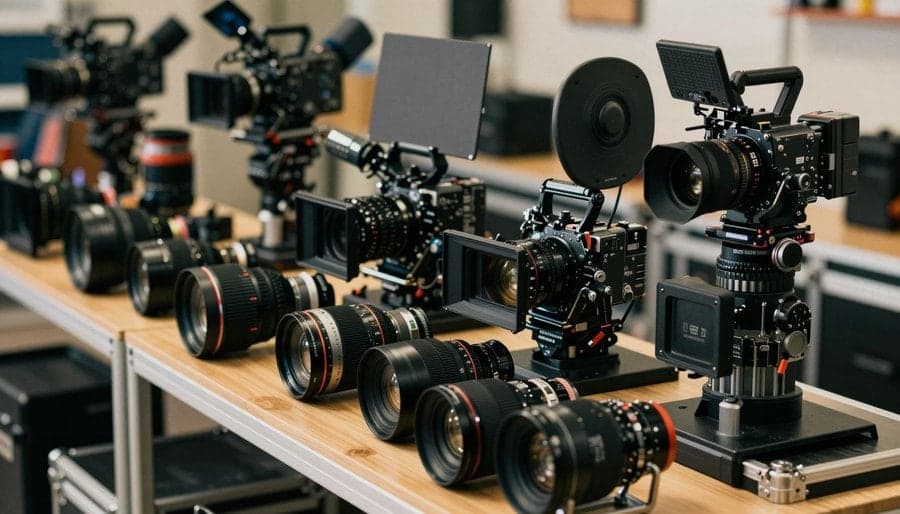
In camera hire, a missing lens cap or the wrong battery isn't a small thing you smooth over with an apology afterwards. It can stop a production dead on the day, on location, with a crew standing around and a schedule that has no room to absorb a delay. A commercial shoot, a documentary crew, or a photographer covering a one-off event books a specific combination of body, lenses, filters, batteries, and grip for a reason: the shot list depends on having all of it, not most of it. Leave one filter or one charged battery off the truck and the whole booking is compromised, regardless of how good everything else in the kit is.
Photography and video equipment is also unusually fragile relative to its value. A knock that a flight case shrugs off can misalign a lens element or dent a mount just enough to stop it seating on a body properly, and none of that is visible until someone tries to use it on the next job. That combination of high replacement cost and low tolerance for hidden damage is what makes camera hire a harder operational problem than renting equipment that's cheaper to replace or more forgiving of rough handling.
The equipment side of the problem is just as unforgiving. A camera body, a set of prime lenses, and a decent lighting and grip package can represent tens of thousands of pounds sitting on a single counter. When something comes back with a scratched filter thread, a cracked screen, or simply doesn't come back at all, "we think it came back fine" is not evidence anyone can act on — not the rental business trying to recover a repair cost, and not the customer disputing a deposit deduction. Camera and photography rental businesses that get this right treat condition records, kit assembly, and deposit handling as core operational processes, not paperwork bolted on after the fact.
Condition Records at Dispatch and Return
Every piece of camera equipment that leaves the counter needs to be checked before it goes, and checked again the moment it comes back. This isn't about assuming bad faith on the customer's part — it's about having a shared, accountable record that protects both sides of the hire. A customer who returns a lens with a scratch that was already there when they picked it up shouldn't be charged for damage they didn't cause. Equally, a rental business that sends out a battery already down to 40% health shouldn't be blamed when it doesn't last the full day on set.
This is exactly the gap that condition and damage records are built to close: photographing and noting the state of each item as it leaves, and again as it comes back, so there's a record to point to instead of two people trying to remember what a lens barrel looked like on a Tuesday morning three weeks ago. When a dispute does come up — a mark on a body, a chip in a filter, a torn strap — whoever is reviewing the return has dispatch photos and return photos sitting against the same booking, not a vague recollection. That record is what turns a damage claim from an argument into a straightforward comparison, and it's what makes a deposit deduction, or a full refund, defensible rather than arbitrary.
It also protects the relationship day to day, not just in the rare dispute: a customer who can see that condition is checked consistently, on every hire, is more likely to trust a deposit deduction when one is genuinely warranted, and less likely to assume the worst when a returns clerk points out a mark.
Kits, Not Loose Items
Camera equipment rarely goes out as a single item. A booking is a body, two or three lenses, a set of filters, spare batteries and chargers, a tripod, and often audio and lighting accessories on top — assembled to match what a specific job needs. Treating each of those as a separate line to track manually is how accessories get left behind: someone pulls the body and the primary lens, remembers the tripod, and forgets that the job also called for a matte box or a particular ND filter.
Booking and tracking camera equipment as complete kits changes that. A camera package is assembled from its individual components once, as a template, so that pulling the kit for a job pulls everything it's supposed to contain — not just the headline items. At dispatch, the kit is checked against its own list rather than against a technician's memory. At return, each accessory is checked back in against that same original booking, so a missing battery charger or a filter left in a bag at the last location shows up immediately as a gap against the kit, rather than as a mystery discovered weeks later when someone else books the same lens and finds a filter thread missing.
Bundling components into a kit also simplifies pricing: rather than calculating a rate for every possible combination of body, lenses and accessories a customer might want, a rental business can price the package as a whole and adjust it for the length of the hire, while still knowing exactly what's inside. For the desk staff assembling a kit under time pressure, that also cuts down on the judgement calls — the kit template says what belongs, so nothing is left to memory on a busy morning.
Deposits and Insurance Details Tied to the Hire
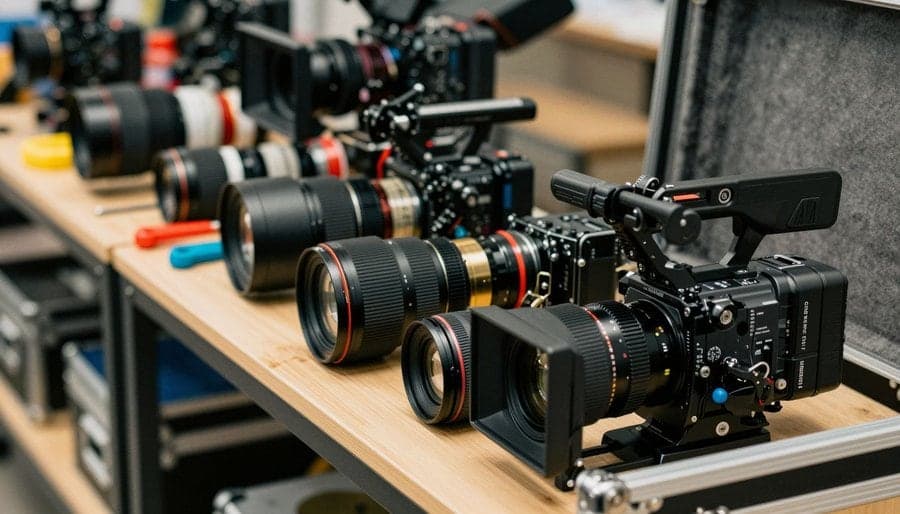
High-value gear needs more than a handshake before it leaves the building. Most camera rental businesses take a deposit, and many ask for insurance or hirer's liability details before releasing equipment that would be expensive to replace outright. The paperwork side of that is where things tend to go missing — a signed agreement in one folder, an insurance certificate emailed separately, a deposit noted in a spreadsheet that doesn't obviously connect to the booking it belongs to.
Renttix supports capturing deposits, insurance details, and signed agreements directly against each hire, so every document is tied to the order rather than filed somewhere adjacent to it. Worth being precise about what that means: Renttix captures and stores the insurance details a customer provides — policy references, cover notes, liability confirmations — as part of the hire record. It doesn't underwrite insurance or act as an insurer itself; it's a place to keep the paperwork that already exists to hand, attached to the order it relates to, so that if a dispute or a claim comes up months later, nobody is searching through email threads to find out whether a customer's cover was in place when a lens went out the door.
That distinction matters because it's easy to conflate "the software tracks insurance information" with "the software insures the equipment" — they are not the same thing, and a rental business still needs its own commercial insurance arrangements independent of whatever a customer provides.
Which Serial Number Was on Which Job
Two lenses of the same model aren't interchangeable once one of them has been dropped, or is overdue a sensor clean, or has a slightly loose zoom ring that a previous hirer mentioned. For high-value gear, knowing that "a 50mm prime" went out isn't enough — the question that actually matters, especially after a damage report or a customer complaint, is which serial-numbered unit was on which job.
This is where per-asset tracking earns its place in a camera rental operation. Asset intelligence covers individual items rather than product categories: health and cost reporting per asset, defined lifecycle states so a unit that's flagged for repair doesn't get booked out by mistake, barcode stock takes to reconcile what's actually on the shelf, and RFID support for faster, more reliable checks. For a business running dozens of near-identical lens bodies or battery packs, that level of detail is what makes it possible to answer "which one was this" with a serial number and a booking history, rather than a guess.
That level of detail also pays off away from the counter. A periodic barcode stock take reconciles what the system thinks is in the building against what's physically on the shelf, catching a unit that's quietly gone missing before it turns into a bigger loss. And when a piece of equipment needs to come out of circulation — for a sensor clean, a firmware update, or a repair after a reported knock — a defined lifecycle state stops it from being booked out again until someone has actually cleared it, rather than relying on a sticky note on a shelf.
A Morning at the Camera Hire Counter
To make this concrete, picture a camera hire counter on the morning of a documentary shoot — illustrative, not a real customer. The production has booked a full kit: a camera body, three lenses, a matte box, a set of ND filters, six batteries, two chargers, a tripod, and a shotgun mic. The crew is collecting at 7am for a 9am call time on location, so there's no slack for discovering a missing accessory once they're already on the road.
Because the kit was built and booked as a single package, the morning pull is a checklist against that package rather than a scramble to remember what a "full documentary kit" usually includes. Each item gets a quick condition check and photo before it goes out — the lens barrels, the filter glass, the battery contacts — logged against the booking. The crew signs for the kit, the deposit and insurance details are already attached to the order from when it was booked, and the whole package goes out the door as one accountable unit.
When it comes back that evening, the same checklist runs in reverse: everything gets checked back in against the original kit, any damage gets photographed against the fresh dispatch record, and the deposit decision is made from evidence rather than memory.
One Record From Counter to Return
None of this works if condition checks, kit contents, deposits, and asset history live in different places — a notebook for damage, a spreadsheet for kits, a filing cabinet for signed agreements. The value is in having it as one connected record: the same booking that captured the deposit and insurance details is the one that lists what the kit should contain, and the one that carries the dispatch and return condition photos for every serial-numbered item inside it.
That's the practical case for running camera and photography hire on a single platform rather than a patchwork of tools glued together with good intentions. Renttix brings quoting, contracts and e-signatures, dispatch, payments, deposits, invoicing, and returns into one system, so a camera rental business can see the full life of a hire — from the kit that was booked, through the condition it left in, to the condition it came back in — without switching between systems to piece the story together. If you're weighing up whether your current setup gives you that level of accountability for high-value gear, book a walkthrough and bring a real kit list to talk through.
Frequently Asked Questions
This comes down to what was recorded at dispatch, not what anyone remembers afterwards. When a camera package is booked and assembled as a kit, the system holds a definitive list of what that kit is meant to contain, and that list is what gets checked against at dispatch and again at return. If a matte box or a specific filter wasn't on the kit list for that booking, or wasn't checked out against it, there's a record showing it never left with the rest of the equipment — rather than the rental business's word against the customer's.
Per-asset tracking treats each serial-numbered item as its own record rather than grouping everything of the same model together. Every booking that includes a specific lens or body links back to that individual asset's history, so it's possible to see exactly which unit went out on which job, alongside its own condition and repair history. Barcode or RFID checks at dispatch and return make that link reliable in practice, rather than depending on staff to note serial numbers by hand under time pressure.
The record needs to exist at both ends of the hire, not just when something looks wrong. Photographing and noting the condition of each item at dispatch, and again at return, against the same booking, gives a direct before-and-after comparison rather than a single after-the-fact inspection with nothing to compare it to. That paired record — dispatch condition next to return condition, tied to the specific hire and the specific asset — is what turns a damage claim into a comparison of evidence rather than a dispute over memory.
Explore Renttix
Ready to modernize your rental operations?
Payments + deposits enabled • Quick setup