

Published September 22, 2026
Tool hire is a volume business, not a value business
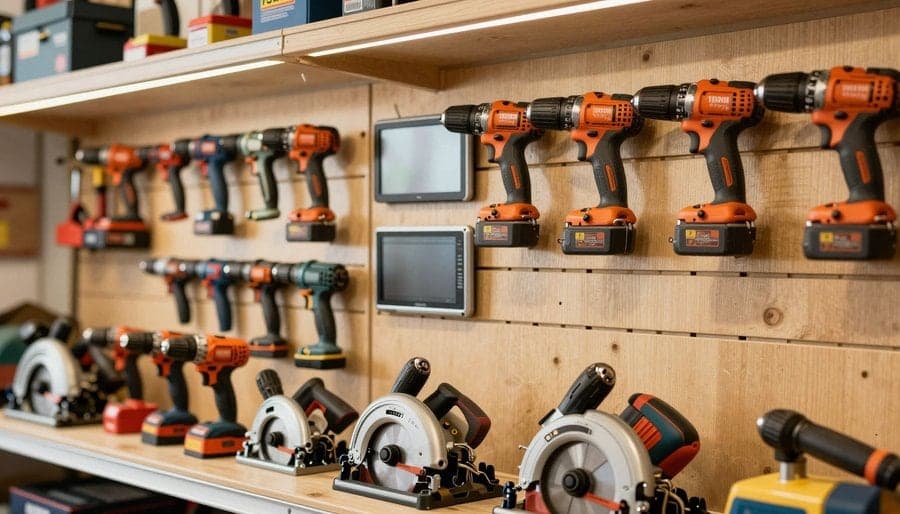
Walk into a plant hire yard and you might see a few dozen machines — excavators, generators, access platforms — each worth a significant sum and each hired out for weeks or months at a time. Walk into a tool hire counter and the picture is completely different: shelves and cages holding hundreds of individual items, most worth very little, many of them going out and coming back within the same day. A single busy Saturday morning at one location can generate more individual transactions than a plant hire yard processes in a month.
That difference isn't cosmetic — it changes what the software running the business actually needs to do. Plant hire software can treat each hire as a considered, relatively slow-moving event: check the asset, agree a multi-week rate, plan a single delivery. Tool hire software has to handle counter staff processing a drill, a floor sander and a set of ladders back to back, each to a different customer, each with a different hire length and rate, while the same system is also running longer contractor accounts and a delivery route in the background. It's a genuinely different operational problem, and software built for the slower, high-value end of the hire market tends to show its limits quickly once it meets real counter-transaction volume.
This is the specific set of problems tool hire operators need their software to solve: managing a large inventory without losing track of individual items, handling hire durations that swing from a few hours to several weeks, coordinating a delivery and pickup schedule made up of many small jobs rather than a handful of large ones, keeping powered tools within their testing cycle, and — for hire chains — knowing what's sitting on a shelf at a different location before turning a customer away.
Why counter transactions need different software
A tool hire counter transaction looks simple from the customer's side — pick up a cement mixer, hire it for the weekend, bring it back Monday — but underneath it, the same operational steps happen as for any hire: check the item is actually available, calculate the correct rate for the length of hire, record who has it and when it's due back, and update stock the moment it leaves the building. The difference in tool hire is frequency. A plant hire desk might run that sequence a handful of times a day. A tool hire counter runs it dozens or hundreds of times, often with several customers waiting at once.
When that volume meets a system that wasn't built for it — a paper hire book, a general-purpose spreadsheet, or software designed around large, infrequent hires — the cracks show in predictable places: items double-booked because two staff members checked stock at different times, wrong rates charged because nobody had set a rate for the exact length of hire someone needed, and pickups that get missed because a short same-day hire never made it onto anyone's schedule. None of these are exotic edge cases in tool hire; they're what an ordinary trading day looks like once volume is high enough.
Renttix's tool hire industry page names this directly as the sector's core operational challenge: managing large inventories, handling short and variable hire durations, and coordinating delivery and collection — all at the volume tool hire actually runs at, not the volume a system happens to be designed for on paper.
Flexible rate structures for hire lengths that vary by the hour
The rate problem in tool hire isn't that pricing is complicated in the plant-hire sense of negotiating a bespoke long-term contract. It's that the same item needs several valid prices depending on how long it's out, and the counter needs to apply the right one instantly, without a manager working it out on a calculator while a line forms.
A cement mixer or a breaker might have a day rate, a week rate that works out cheaper per day than four separate day rates, and a monthly rate for a contractor running a job over several weeks. All three need to exist for the same physical item at the same time, and the system needs to apply the correct one — or let staff apply it — based on how long the customer actually keeps the item, not how long they said they would when they walked in.
Renttix handles this through flexible rate management: day, week, and long-term pricing configured per item, with billing calculated automatically against the actual hire duration rather than requiring someone to re-key a different rate if a hire runs on. That matters in tool hire specifically because so many hires change length after the fact — a weekend hire that turns into five days because a job overran, or a short hire extended twice by phone. The billing needs to follow what actually happened, not just what was agreed at the counter on day one.
Illustrative example: the counter that runs two speeds at once
To make this concrete, picture a tool hire counter processing dozens of short same-day hires — drills, sanders, ladders — alongside a handful of longer contractor jobs, such as a breaker or a set of shoring props out for three weeks on a groundwork job. The staff handling walk-in trade need the system to move fast: check availability, apply the right short-term rate, print the ticket, move to the next customer. The same system, at the same time, needs to keep tracking the long-term contract correctly so it bills weekly or monthly without anyone having to remember to do it by hand. This is illustrative rather than a specific customer case, but it's a recognizable shape for almost any independent tool hire location or chain.
Coordinating delivery and pickup when the schedule is full of small jobs
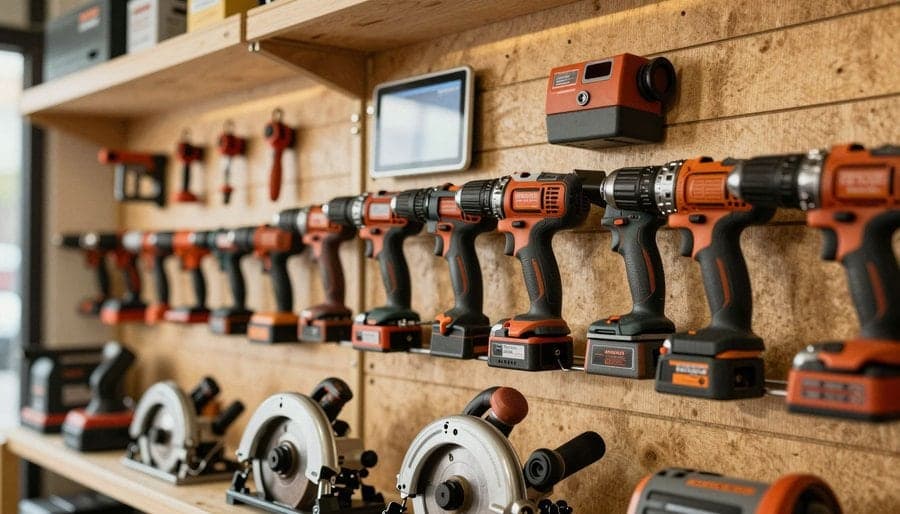
Plant hire delivery is usually a small number of large jobs: one truck booking, one lowboy movement, one crane hire, planned well in advance. Tool hire delivery and pickup is the opposite shape — potentially dozens of small drops and pickups across a single day, often booked with much less notice, and frequently changing as customers extend a hire or finish early.
Renttix supports this through its rental dispatch workflow: delivery and pickup jobs are planned on a dispatch board, grouped by route so a driver covering a local area picks up several jobs in one loop rather than the office working out routes by hand, and assigned to drivers from the same system used to manage the hire itself. Recurring schedules can generate jobs automatically, which matters for tool hire because a share of the work is genuinely repeat business — the same contractor site getting a weekly swap of consumable items, for example — and that shouldn't need rebooking from scratch every time it comes round.
What changes when pickups happen the same day they're booked
The distinguishing feature of tool hire dispatch, compared with plant hire, is how often a job is booked and needs actioning the same day. A customer finishing early and calling for a pickup that afternoon, or a contractor needing an extra item delivered before end of day, is routine rather than exceptional. A dispatch system that assumes jobs are planned a day or more in advance struggles here; one built to let staff drop a same-day job onto an existing route, with drivers seeing the updated schedule immediately, fits how tool hire actually operates on the ground.
PAT testing: the compliance angle that's specific to powered tools
Plant hire has its own testing regimes for lifting equipment, but tool hire carries a compliance burden that's distinctly its own: a large proportion of the fleet is portable electrical equipment, and portable appliance testing (PAT) is the routine, recurring check that keeps it legal and safe to put out on hire. Unlike a one-off certification, PAT testing is cyclical — every powered tool needs re-testing on a schedule, which means a hire business with hundreds of powered items has hundreds of individual due dates to track at once, all moving at different rates.
The operational risk is straightforward: an item with a lapsed PAT certificate shouldn't go out on hire, but if the system tracking hire stock knows nothing about testing status, there's nothing actually stopping that happening — a customer can walk out with a drill that's overdue a test simply because nobody checked before it came off the shelf.
Renttix treats statutory testing regimes, including PAT, as part of the platform rather than a separate spreadsheet running alongside it: certificate storage against the asset record, due lists showing what needs testing and when, and booking blocks that stop a lapsed asset going out on hire until it's been re-tested. For a tool hire fleet where powered items are a large share of the stock, that link between the testing record and the booking system is what actually prevents a compliance gap turning into a hire that should never have gone out.
Multi-location stock visibility for hire chains
A single-location tool hire shop only has to know what's on its own shelves. A hire chain with several locations has a different, harder problem: a customer might call the location nearest them looking for an item that's out on hire there but sitting idle twenty minutes away at another location — and if staff can't see across locations, that hire is lost, or the business ends up buying or hiring in a duplicate item it already owns nearby.
This is one of the tool hire challenges Renttix is built around directly: real-time availability tracking that shows what's available, what's on hire, and what's due back, across all locations, without anyone having to call around other locations or walk the yard to check by hand.
One shared pool of stock, not several separate ones
For a chain, that cross-location visibility is what turns several separate location inventories into one shared pool of stock that any location can draw on, rather than several businesses that happen to share a name and a point-of-sale system. It also matters for planning: a manager deciding whether to buy another breaker can see whether one is already sitting idle two locations away before spending the money.
Bringing it together
None of these problems — volume, variable rates, small-job dispatch, PAT compliance, multi-location visibility — are solved by treating tool hire as a smaller version of plant hire. They're solved by software built around how tool hire actually runs: high transaction counts, short and unpredictable hire lengths, a delivery route made of many small jobs rather than a few large ones, a fleet where testing status matters as much as availability, and, for chains, stock that needs to be visible everywhere at once.
Renttix brings real-time availability, flexible rate management, and dispatch coordination together in one system built for that kind of volume, alongside the accounting sync, customer portal, and testing and compliance tracking a tool hire operation needs day to day. If you want to see how it fits a tool hire business specifically, the tool hire industry page is the place to start, or you can book a demo and walk through it against your own operation.
Frequently asked questions
By storing more than one valid rate against each item — typically a day rate, a week rate, and a longer-term rate — and calculating the bill against the actual length of the hire rather than a single fixed price agreed at the counter. Renttix's [flexible rate management](/en-us/features/billing-automation) configures day, week, and long-term pricing per item and applies it automatically, including when a hire runs on past its original return date.
Testing needs to be linked to the asset record rather than managed on a separate spreadsheet, so certificate status and due dates sit alongside availability. Renttix stores test certificates against each asset, maintains a due list of what needs re-testing and when, and can block a lapsed item from being booked out until it's been retested — which stops an overdue tool reaching a customer by mistake.
Each location's stock needs to be visible to every other location in real time, not just to the one physically holding it. Renttix's real-time availability tracking shows what's available, on hire, or due back across all locations from the same system, so staff at one location can see and offer stock that's sitting idle at another rather than turning a customer away or hiring in a duplicate item.
Explore Renttix
Ready to modernize your rental operations?
Payments + deposits enabled • Quick setup