
Borgs en Vrijstellingen Oplossen Verschillende Problemen
Borgs en schadevrijstellingen worden vaak samengevoegd, maar ze beschermen je op tegenovergestelde manieren, en ze verwarren leidt tot geschillen aan beide kanten van de verhuur.
Een borg is het geld van de klant, tijdelijk vastgehouden. Je neemt het voor de verhuur, je houdt het als onderpand tegen verlies of schade, en — dit is het deel dat operators vergeten — je geeft het terug. Het is een garantie, geen inkomsten. Behandel het als inkomen en je zult uiteindelijk geld terugbetalen dat je al hebt uitgegeven.
Een schadevrijstelling is jouw geld, verdiend. Voor een vergoeding, meestal een percentage van de verhuur, stem je ermee in om bepaalde accidentele schade te dekken zodat de klant geen open eindverantwoordelijkheid heeft. Het is een product dat je verkoopt, met voorwaarden en uitsluitingen, en het erkent inkomsten op het moment dat de verhuur begint. De twee kunnen naast elkaar bestaan — een vrijstelling die de blootstelling van de klant beperkt, plus een kleinere borg voor het overschot — maar alleen als iedereen begrijpt wat wat is. Schrijf het onderscheid in je voorwaarden in duidelijke taal, want de klant die denkt dat een vrijstelling hen onoverwinnelijk maakte, is de klant die een wrak terugbrengt en erover discussieert.
Pre-Autorisatie vs Geld Inhouden
Er zijn twee manieren om een borg te beveiligen, en de verkeerde keuze is waar de wrijving begint. Je kunt de borg in rekening brengen — geld verlaat daadwerkelijk de rekening van de klant en blijft bij jou totdat je het terugbetaalt. Of je kunt het pre-autoriseren — een blokkade op de kaart van de klant die de fondsen reserveert zonder ze te verplaatsen.
Voor de meeste verhuurbedrijven is pre-autorisatie de betere standaard. Het beschikbare saldo van de klant daalt, dus de onderpand is reëel, maar er verandert geen geld van eigenaar tenzij je de blokkade vastlegt. Er is niets terug te betalen als de apparatuur schoon terugkomt, wat de meest voorkomende klacht over borgs wegneemt: je hebt mijn geld genomen, waar is het?
Stripe en vergelijkbare verwerkers maken dit praktisch. Een pre-autorisatie wordt geplaatst bij de checkout en vastgehouden voor een periode — meestal tot zeven dagen, verlengbaar — dan gedeeltelijk vastgelegd, volledig vastgelegd of vrijgegeven. Leg alleen de schade vast die je kunt documenteren, geef de rest automatisch vrij, en de klant ziet de blokkade verdwijnen in plaats van te wachten op een handmatige terugbetaling. De mechanica is belangrijk: een cyclus van in rekening brengen en terugbetalen lijkt op een bankafschrift precies alsof je geld hebt genomen en het met tegenzin hebt teruggegeven. Een blokkade die eenvoudig verloopt, lijkt op vertrouwen.
Conditie Uit: Het Verslag Dat Je Zou Willen Hebben
Elke schadegeschil is eigenlijk een discussie over het verleden — hoe zag de apparatuur eruit toen deze vertrok? Als je dat niet met bewijs kunt beantwoorden, kun je de discussie niet winnen, en je kunt zeker geen kosten aan een bank verdedigen.
Documenteer de conditie bij het vertrek, elke keer, niet alleen voor de dure items. Foto's van de daadwerkelijke eenheid — geen stockafbeelding — met tijdstempels en gekoppeld aan de specifieke verhuur. Meter- of uurstanden waar van toepassing. Een notitie van bestaande slijtage, zodat een vooraf bestaande kras nooit wordt verward met nieuwe schade. En de erkenning van de klant, bij voorkeur een handtekening op hetzelfde verslag dat ze kunnen zien.
Het doel is een conditiebasis die niemand later kan betwisten, omdat iedereen het op dat moment heeft gezien. Dit voelt vervelend totdat het de eerste keer je een viercijferige discussie bespaart, op dat moment wordt het niet onderhandelbaar. Systemen die de yard in staat stellen om foto's en metingen vast te leggen tegen de bestelling op een telefoon — Renttix onder hen — maken de basis van een archiveringsproces tot dertig seconden op het moment van verzending.
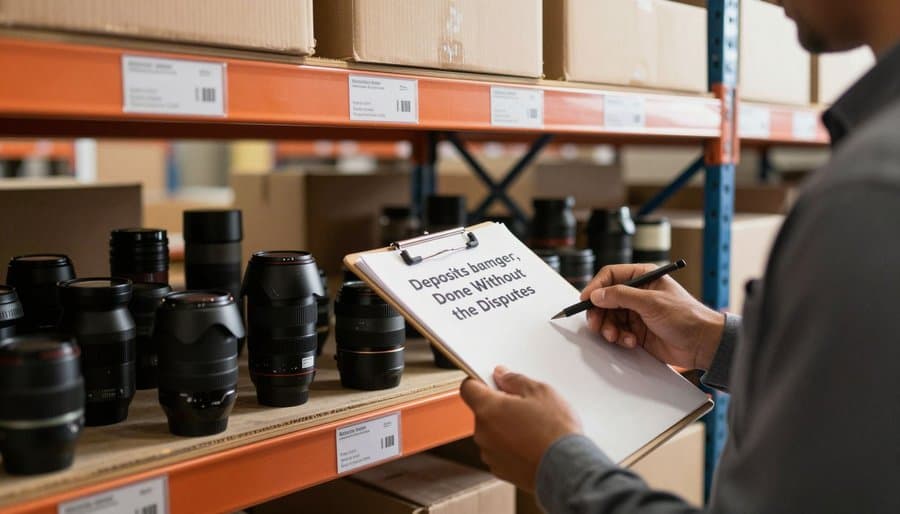
Conditie In: Waar de Meeste Geschillen Worden Gewonnen of Verloren
De terugkeer is het moment van de waarheid, en het is meestal gehaast. De apparatuur komt aan het einde van de dag terug, de yard is druk, de chauffeur wil naar huis, en de inspectie die elke schadeclaim zou moeten verankeren, krijgt slechts een blik in plaats van een verslag.
Vertraag de terugkeer net genoeg om het te documenteren. Fotografeer de apparatuur bij ontvangst, dezelfde hoeken die je op de weg naar buiten hebt geschoten, zodat de voor-en-na naast elkaar staan. Log brandstof, uren en ontbrekende accessoires onmiddellijk tegen de bestelling. Als er schade is, leg het vast terwijl de levering vers is — niet drie dagen later, wanneer het verhaal is verzacht en het bewijs één machine onder vijftig in de yard is.
De combinatie is wat geschillen en terugboekingen wint. Een enkele foto van een beschadigde machine bewijst niets; de klant zegt gewoon dat het al zo was. Dezelfde machine die schoon is gefotografeerd bij verzending en beschadigd bij terugkeer, beide tijdgestempeld tegen dezelfde verhuur, beëindigt het gesprek. Documenteer beide uiteinden of effectief geen van beide — een retourverslag zonder basis om mee te vergelijken is gewoon jouw woord tegen dat van hen.
Eerlijke Schadebeoordeling: Breng de Reparatie in rekening, Niet de Woede
Hoe je schade prijst, bepaalt of de klant ooit terugkomt. De verleiding, nadat een machine beschadigd terugkomt, is om punitief in rekening te brengen — volledige vervanging, een rond bedrag, iets dat als gerechtigheid aanvoelt. Die instinct verliest goede klanten en nodigt de terugboeking uit waar je zojuist over hebt gelezen.
Breng de reparatie in rekening, niet de woede. Schadebeoordeling moet gebaseerd zijn op echte cijfers: de werkelijke kosten om de apparatuur in orde te maken, ondersteund door een offerte of een onderdelen- en arbeidspecificatie, met eerlijke slijtage uitgesloten omdat dat precies is waar het tarief al voor betaalt. Maak onderscheid tussen accidentele schade die de vrijstelling dekt en nalatigheid en misbruik die dat niet doet, en wees in staat om naar de voorwaarde te wijzen die de lijn trekt.
Consistentie is het stille deel. Dezelfde schade zou dezelfde klant elke keer hetzelfde bedrag moeten kosten — niet meer wanneer de yard geïrriteerd is, minder wanneer ze hen leuk vinden. Een gedocumenteerde beoordeling — hier is de schade, hier zijn de reparatiekosten, hier is de behandeling van de vrijstelling, hier is het bedrag — is niet alleen eerlijker, het is ook veel gemakkelijker te verdedigen als de klant de kosten bij hun bank betwist. Eerlijkheid en verdedigbaarheid blijken dezelfde discipline te zijn.
De Terugboeking Winnen Voordat Het Gebeurt
Een terugboeking is een klant die hun bank vertelt dat je geld hebt genomen dat ze niet hebben goedgekeurd. Je kunt het bestrijden, maar je wint of verliest op bewijs dat lang voor het geschil is verzameld — wat betekent dat de terugboeking eigenlijk wordt beslist bij verzending en terugkeer, niet bij de beroepsprocedure.
De verdedigbare kosten hebben een papieren spoor: ondertekende voorwaarden die de borg en vrijstelling onthullen, een gedocumenteerde conditiebasis, overeenkomende terugkeervan bewijs, en een schadebeoordeling gekoppeld aan de werkelijke reparatiekosten. Geef de verwerker dat pakket en de meeste geschillen worden in jouw voordeel opgelost. Geef ze een blote transactie en een claim van schade, en je verliest bij voorbaat, omdat de bewijslast bij de handelaar ligt.
De meeste terugboekingen worden echter voorkomen in plaats van gewonnen. Verrassing veroorzaakt geschillen — een borg die de klant vergat te accepteren, een kostenpost zonder uitleg, een blokkade die zonder waarschuwing in een debet veranderde. Vertel klanten wat je zult vasthouden en waarom, leg alleen vast wat je kunt documenteren, meld voordat je iets neemt, en geef prompt vrij wanneer de apparatuur schoon terugkomt. Doe dat consistent en de geschillen die nog steeds je verwerker bereiken, zijn de zeldzame echt slechte actoren — degenen voor wie het bewijs al was opgebouwd om ermee om te gaan.
Sources: American Rental Association (ARA); European Rental Association (ERA)